
Further Education and Training Certificate (FETC):
Contact Centre
Contact Centre Qualification
Our FETC Contact Centre qualification is available for any individual who are or wish to be involved in the Contact Centre industry. It also serves as the entry qualification into Contact Centre operations and management. This qualification will be registered at NQF Level 4.
Purpose
Contact Centres have become key business tools – integral to the way organisations achieve their business objectives. Contact Centres are a new industry – there is a need to develop career paths in this field, and it is a high growth industry constantly in need of skilled people.
Target Group
This qualification is designed to meet the needs of individuals already working in the contact centre industry or is suitable for individuals wishing to pursue operations and management within the contact centre industry.
Notional Hours and Credits
Credits: 132
Notional Hours: 1320
Days: 49,5
Notional Hours: 1320
Days: 49,5
- Contact Session 30%
Theory: 264hrs
Practical: 132hrs
Practical: 132hrs
- Experiential Learning 70%
WPE: 528 hrs
Ass: 396 hrs
Ass: 396 hrs
Programme Module breakdown
Module 1: Service levels in Contact Centres
Understand and implement service levels and their monitoring in Contact Centres.
Module 2: Contact Centre Staff monitoring
Monitor and manage Contact Centre support staff and their meeting of targets and standards.
Module 3: Dynamic Sales Techniques
Apply specific Contact Centre sales knowledge and skills in creating and meeting sales targets and requirements.
Module 4: Contact centre customers
Identify potential customers and build a customer network.
Module 5: Working with Statistical Data
Generate and correlate data from in- bound and out-bound call centre.
Module 6: Coaching for Success
Conduct coaching of colleagues and subordinates.
Module 7: Making sense of Numbers
Simplify the understanding of numeracy within a statistical and personal finance context.
Module 8: Confident Communication
Carry out clear and confident written and oral communication within a business environment.
Module 9: 2nd Language Communication
Communicate confidently and clearly in Afrikaans and Zulu.

Career Path
Many different roles and careers are linked to and affected by this qualification. They include, but are not limited to:
- Sales Managers
- Administration staff
- Contact Centre Managers
- Category Managers
- Sales Representatives
- Telesales Clerks
- National Account Managers
- Sales Directors
- Key Account Managers
- Client Services Clerks
- Channel Managers
- Quality Assurance staff
- Contact Centre / Call Centre Supervisors
- Contact Centre/ Call Centre Agents
- General Managers
- IT Staff
Qualification Rules
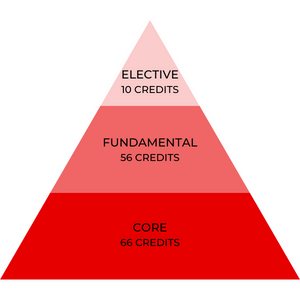
Fundamental Component
The Fundamental Component consists of Unit Standards in:
- Mathematical Literacy at NQF Level 4 to the value of 16 credits
- Communication at NQF Level 4 in a First South African Language to the value of 20 credits
- Communication in a Second South African Language at NQF Level 3 to the value of 20 credits
It is compulsory therefore for learners to do Communication in two different South African languages, one at NQF Level 4 and the other at NQF Level 3.
All Unit Standards in the Fundamental Component are compulsory.
Elective Component
Learners are to choose Unit Standards to a minimum of 10 credits from the Elective Component.
Core Component
The Core Component consists of Unit Standards to the value of 66 credits all of which are compulsory.
Entry Level Requirements
The learning assumed to be in place is only a guide in order to help the learner cope with the unit standards in the qualification.
The following is the learning assumed to be in place:
The following is the learning assumed to be in place:
- Learners accessing this unit standard or qualification will have demonstrated competency against unit standards in Contact Centres at NQF Level 2 or equivalent
- Learners are expected to have demonstrated competency in language Verbal and written communication skills) and numeracy at NQF Level 3 or equivalent
- Learners will demonstrate competence in a Second Language (verbal and written communication skills) at NQF level 2.